Off-Track Double Door Rescued in Eastmark, Mesa
A roller failed and pulled a heavy double door off track, we realigned it and replaced all the rollers.
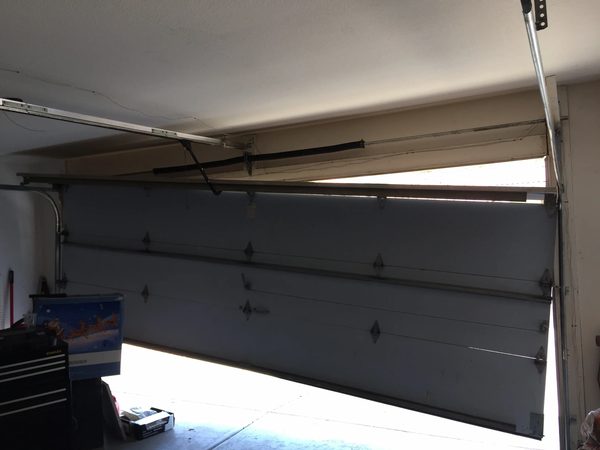
A family in the Eastmark community of Mesa came home to a sight that understandably alarmed them: their double-car garage door was hanging crooked, jammed in place, with one side clearly higher than the other. They had not hit it with a car, it had simply failed during a normal closing cycle. They wisely stopped using it and called us rather than trying to force it.
When we arrived we secured the door first. An off-track door is heavier and less predictable than it looks, and the cables and springs are still under tension, so the safe first step is always to stabilize it before diagnosing anything. With the door secured, the cause was clear: a worn roller had finally failed, and once it popped free, that side of the door climbed out of the track and the whole door racked sideways.
Worn rollers are extremely common out here. The original steel rollers that come on many doors have small bearings that the valley dust works into over time. As they wear, they bind and ride roughly until one eventually seizes or breaks, and on a heavy double door that is often enough to pull the door off track.
We walked the homeowners through what we found and gave them an upfront quote. The fix was to realign the door, replace the failed roller, and, because the rest of the steel rollers were worn to the same degree, replace the full set with quiet nylon rollers. Nylon rollers ride far more smoothly, resist the dust better, and dramatically reduce the chance of this happening again.
We also inspected the cables and the track itself for damage, since an off-track event can bend a track section or fray a cable. In this case the track had a minor tweak we were able to straighten, and the cables were intact. We reseated everything, installed the new rollers, and carefully guided the door back into proper alignment.
After rebalancing and lubricating the system, we tested the door through several full cycles. It now rides smoothly and quietly, sits square in the opening, and the family avoided the much larger expense of a new door. They were relieved to learn that an off-track door, while scary to look at, is usually very repairable when caught before further damage is done.
The lesson we shared with them is one we give a lot of Mesa homeowners: if your door starts sounding rough or rattling as it moves, that is the rollers telling you they are wearing out. Replacing them proactively is inexpensive and prevents exactly this kind of off-track failure.
The bigger lesson for Eastmark homeowners, and really for anyone with a double-car door, is that rollers are the early-warning system for off-track failures. A door that has started sounding rough or rattling is telling you the rollers are wearing, and replacing them proactively for a modest cost prevents the much larger headache of an off-track door that strands your car and risks bending tracks and cables.
This repair also shows why we secure the door before anything else and why we never recommend pushing an off-track door back into place yourself. The combination of weight and stored tension makes it genuinely hazardous. For a trained technician with the right tools it is routine, and in this case the family was back to a smooth, quiet, properly aligned door the same day, having avoided the cost of a full replacement entirely.
We took a moment to explain the roller choice to the family, because it matters. The original steel rollers have exposed bearings that the valley dust grinds away over time, while sealed nylon rollers keep the dust out, run quietly, and ride more smoothly through the track curve. Upgrading the full set is inexpensive and noticeably changes how the door sounds and feels.
We also inspected the bottom brackets and the lift cables while the door was apart, since an off-track event can stress those components. Everything else checked out, so the family got a complete, lasting repair rather than a quick realignment that might let the problem return. That thoroughness is the difference between a door that is patched and a door that is fixed.